

Personal Guarantor Insolvency under IBC: Section 95 and the NCLT Process
Reviewed by Manu Shankar, Advocate, ManAT Legal
Personal guarantor insolvency under IBC is not an ordinary guarantee-enforcement suit and does not start automatically when a company defaults. A creditor may initiate the Part III insolvency resolution process against a personal guarantor to a corporate debtor through a Section 95 IBC application, after the prescribed demand and non-payment stage. The filing triggers an interim moratorium; an insolvency professional examines the application; and the NCLT decides admission or rejection before any repayment plan is considered.
Personal guarantor insolvency under IBC differs from guarantee liability
A guarantee may make the guarantor liable according to the contract and Section 128 of the Contract Act, subject to available defences. Part III of the IBC provides a collective insolvency-resolution process for the individual. It is not a substitute for proving the guarantee, invocation, debt, default and statutory eligibility.
The creditor should distinguish direct enforcement from personal guarantor insolvency under IBC. Insolvency is designed to examine the debtor’s financial position and a possible repayment plan, not merely to obtain a money decree. Choosing the correct debt route should occur before filing.
Who is a personal guarantor to a corporate debtor?
The Code defines a personal guarantor as an individual who is the surety in a contract of guarantee to a corporate debtor. The relationship to a corporate debtor is central to the notified IBC framework and NCLT forum. Directors or promoters are not covered merely because of their office; there must be a relevant personal guarantee.
Confirm the guarantee’s execution, parties, scope, cap, continuing nature, governing terms, amendments, invocation and the underlying corporate debt. A corporate guarantor follows the corporate insolvency framework, not this personal-guarantor process.
Which NCLT may hear the matter?
Section 60 makes the NCLT with territorial jurisdiction over the registered office of the corporate person the adjudicating authority for insolvency resolution and bankruptcy of its personal guarantors. Where corporate insolvency or liquidation is pending, the connected personal-guarantor proceeding is to be filed before, or transferred to, that NCLT in accordance with the section.
NCLT personal guarantee proceedings can continue under the statutory framework even though the corporate debtor and guarantor remain legally distinct. The Supreme Court upheld the personal-guarantor notification and the NCLT-linked framework in Lalit Kumar Jain and later upheld the Sections 95–100 process in Dilip B Jiwrajka.
Before a creditor files under Section 95
Preparation should begin with enforceability, limitation, forum and process rather than the application form. A defective demand or incomplete default record may undermine the creditor’s Section 95 IBC application or complicate the resolution professional’s report.
Guarantee, invocation, debt and default record
Collect the executed guarantee and amendments, underlying facility documents, corporate-debtor account, invocation notice and delivery proof, payments and recoveries, acknowledgements, security-enforcement history, judgments or awards and an updated computation. Under Section 95(4), the creditor’s application must include details of debt, non-payment after the demand notice and evidence of default or non-repayment.
The prescribed 2019 Rules use Form B for the creditor’s demand notice and Form C for the application. Section 95 requires failure to pay within fourteen days of service of the demand. Current forms, electronic filing requirements, fees and the IBBI regulations amended through 2 June 2026 must be checked at filing.
Limitation and parallel-proceeding check
IBC proceedings are subject to limitation principles. Identify when default occurred, any valid acknowledgements or part payments, earlier recovery actions and the effect of settlements. Parallel corporate CIRP, DRT, SARFAESI, arbitration, civil or criminal proceedings require a precise status map; their existence does not produce one universal result.
Section 95 application and service
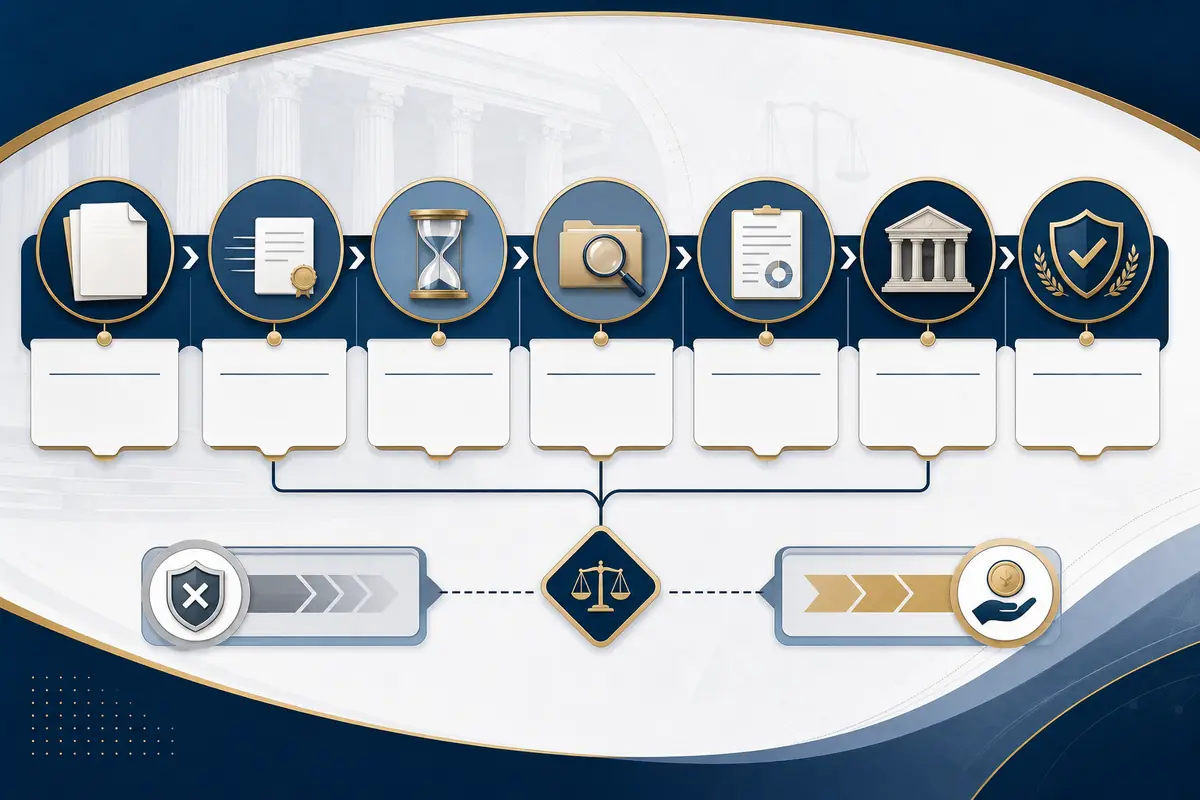
A creditor may apply alone, jointly with other creditors or through a resolution professional. The Section 95 IBC application must be in the prescribed form, contain the statutory information and be provided to the debtor. The filing and service record should include every annexure and a reliable calculation as of the relevant date.
The current IBBI system also records creditor, guarantor, invocation, demand and application information. Regulatory amendments can change document and process requirements, so a stale checklist should not be used.
Interim moratorium under Section 96

The interim moratorium Section 96 begins on the date the Section 94 or Section 95 application is filed and continues until admission. In relation to all debts, pending legal action or proceedings in respect of any debt are deemed stayed, and creditors may not initiate legal action or proceedings in respect of any debt during the period.
The exact reach must be analysed proceeding by proceeding. In 2025, the Supreme Court held that Section 96 protects against civil claims directed toward debt recovery and does not create protection from criminal action. Avoid categorical statements based only on a proceeding’s label; examine its substance and relief.
Resolution professional appointment and Section 99 report
The NCLT directs the IBBI to nominate a resolution professional when the application was filed without one, or seeks confirmation where one was proposed. The professional examines the application and submits a Section 99 report recommending admission or rejection.
In Dilip B Jiwrajka, the Supreme Court explained that this is a recommendatory, facilitative stage rather than a final adjudication of facts by the professional. The debtor is entitled to participate as the statutory process contemplates; the NCLT makes the decision under Section 100.
Admission or rejection under Section 100
The NCLT considers the application and the Section 99 report, then admits or rejects the application within the statutory framework. The decision is judicial. Neither filing nor the professional’s recommendation by itself declares the guarantor insolvent or finally establishes every disputed liability.
|
Stage |
Main event |
Legal effect to track |
|---|---|---|
|
Pre-filing |
Demand, fourteen-day non-payment and evidence preparation |
No IBC filing yet |
|
Filing |
Creditor files and serves Section 95 application |
Interim moratorium begins under Section 96 |
|
Examination |
RP appointment, information review and Section 99 report |
Recommendation, not final adjudication |
|
NCLT decision |
Admission or rejection under Section 100 |
Admission starts the Section 101 moratorium and resolution stage |
|
Resolution |
Claims, repayment plan, creditor consideration and NCLT order |
Outcome depends on statutory voting and approval |
Moratorium and creditor claims after admission
On admission, Section 101 imposes a moratorium for 180 days or until the NCLT passes an order on the repayment plan under Section 114, whichever is earlier. Pending legal action in respect of any debt is stayed, creditors cannot initiate such action, and the debtor cannot transfer, alienate, encumber or dispose of assets or legal rights or beneficial interests except as provided.
The post-admission moratorium is distinct from interim moratorium Section 96. A process chart should keep their triggers, duration and statutory text separate. Secured-creditor rights, excluded assets and particular proceedings require advice under the current Code and decisions.
Repayment plan and creditor decision
The debtor prepares a proposal with the resolution professional for restructuring debts or the debtor’s affairs. A repayment plan personal guarantor may include payments, asset realisation, creditor treatment and implementation terms permitted by the Code and current regulations.
Claims are invited and verified. Depending on the statutory conditions, the resolution professional may summon a creditors’ meeting. Creditors consider the repayment plan personal guarantor under the voting framework, and the NCLT ultimately approves or rejects it under Section 114. A proposed plan is not binding merely because the debtor files it.
What the process does not decide automatically
- Filing does not itself amount to admission.
- The interim moratorium does not erase the debt or guarantee.
- The resolution professional’s report is not a decree on disputed liability.
- Corporate CIRP does not automatically discharge a personal guarantor.
- Approval of a corporate resolution plan does not, by itself, release the guarantor from an independent guarantee.
- Every criminal, regulatory or asset proceeding is not automatically stayed simply because a debt exists.
- Failure of an insolvency resolution process does not make bankruptcy relief automatic without the separate statutory route.
Common mistakes and overstatements

- Filing without proving the personal guarantee and its invocation.
- Using a corporate Section 8 demand notice as if it were the prescribed personal-guarantor demand.
- Ignoring the fourteen-day pre-application stage.
- Selecting an NCLT without mapping the corporate debtor and pending CIRP or liquidation.
- Treating filing as admission or the RP report as a judgment.
- Describing either moratorium as an unlimited shield against every proceeding.
- Relying on pre-June-2026 forms or regulations without checking amendments.
- Presenting insolvency as a collection shortcut rather than a collective resolution process.
Frequently asked questions
These answers distinguish key stages of personal guarantor insolvency from ordinary recovery action. The guarantee, invocation, debt record, demand, limitation, parallel proceedings and current IBC regulations must be reviewed before drawing conclusions about a particular guarantor or creditor.
Can a creditor proceed against a guarantor without first exhausting remedies against the company?
Guarantee liability can be co-extensive under Section 128 Contract Act unless the contract provides otherwise, but a Section 95 filing must still satisfy the IBC, prescribed demand, limitation, forum and evidence requirements. The actual guarantee must be reviewed.
Does filing the application make the person insolvent?
No. Filing activates the interim moratorium and statutory examination. The resolution professional reports; the NCLT decides admission or rejection under Section 100.
Does Section 96 stay cheque or criminal proceedings?
The Supreme Court in 2025 treated Section 96 as protection against civil debt-recovery claims, not criminal action. The substance of the particular proceeding and later law must be checked rather than applying a blanket rule.
Is the repayment plan approved by a simple agreement with one creditor?
No. The plan follows the Code’s claims, meeting and voting framework where applicable and requires the NCLT’s Section 114 order.
Related ManAT Resources
- Insolvency and NCLT lawyers in Bangalore
- Section 8 notice for an operational creditor
- Choosing the correct debt route
- Debt-recovery advice in Bangalore
Personal guarantor insolvency under IBC requires a current-law review of the guarantee, demand, limitation, NCLT connection, moratorium and regulations. This guide is general information and does not replace case-specific advice.