

Domestic Violence as a Ground for Divorce in India
Domestic violence does not just hurt the body. It damages confidence, dignity, and the basic sense of safety inside a marriage. When the abuse continues, staying together may no longer be possible.
Indian law clearly recognizes Domestic Violence as a Ground for Divorce. Survivors can seek both civil protection and criminal action, along with a legal end to the marriage and financial support.
If you are wondering, “Can I end my marriage on the basis of domestic violence?”, the short answer is yes. The longer answer is that you need to understand your rights, the Domestic Violence Act 2005, and how courts treat cruelty in divorce cases.
What is domestic violence against women under Indian law?

The main law on domestic violence is the Protection of Women from Domestic Violence Act, 2005 (PWDVA), commonly called the Domestic Violence Act 2005. It protects wives, female partners in live-in relationships, mothers, sisters, and other women in a domestic relationship.
Under this law, domestic violence against women includes:
- Physical abuse – hitting, slapping, kicking, pushing, or any bodily harm
- Sexual abuse – any non-consensual sexual act or forced intimacy
- Emotional and verbal abuse – insults, humiliation, threats, constant accusations
- Economic abuse – stopping access to money, food, medicine, or a shared house
- Threats and controlling behaviour – stalking, isolation, or threats to children or family
The Act allows survivors to seek:
- Protection orders
- Right to live in the shared household
- Monetary relief and compensation
- Temporary custody of children
All of this can be claimed through an application under Section 12 of the Domestic Violence Act, which lets an aggrieved woman or a Protection Officer approach the Magistrate for relief.
Criminal law: Section 85 BNS and cruelty by husband

Domestic violence can also lead to criminal charges. Under the Bharatiya Nyaya Sanhita, 2023 (BNS), Section 85 punishes a husband or his relatives who subject a woman to cruelty.
“Cruelty” (defined in Section 86 BNS) includes:
- Conduct likely to cause grave injury or drive the woman to suicide
- Harassment to force her or her family to meet unlawful demands, such as dowry
This provision is the successor to the old Section 498A IPC and works alongside the Domestic Violence Act 2005. In serious situations, a survivor may have both a domestic violence case in the Magistrate court and a criminal case under Section 85 BNS.
Domestic Violence as a Ground for Divorce in Family Courts

While the PWDVA and BNS give protection and punishment, Domestic Violence as a Ground for Divorce comes mainly from personal marriage laws, such as:
- Hindu Marriage Act, 1955 – Cruelty is a ground for divorce for Hindus
- Similar cruelty provisions exist in other personal laws for Christians, Parsis, and couples married under the Special Marriage Act
In practice, courts treat repeated domestic violence as a form of cruelty. You do not need a criminal conviction before you can file for divorce.
When deciding a divorce case based on domestic violence, family courts look at:
- Pattern and gravity of cruelty – Is it one incident or sustained abuse?
- Type of harm – physical injuries, threats, emotional trauma, controlling behaviour
- Impact on mental health – fear, depression, or constant anxiety caused by the spouse
- Evidence and credibility – medical records, FIRs, protection orders, witness statements
If the court is satisfied that the marriage has broken down due to cruelty, it can grant a divorce even if the other spouse opposes it.
For a broader view of other fault-based grounds, you can also refer to ManAT Legal’s guide on grounds for divorce in India.
Legal remedies under the Domestic Violence Act 2005
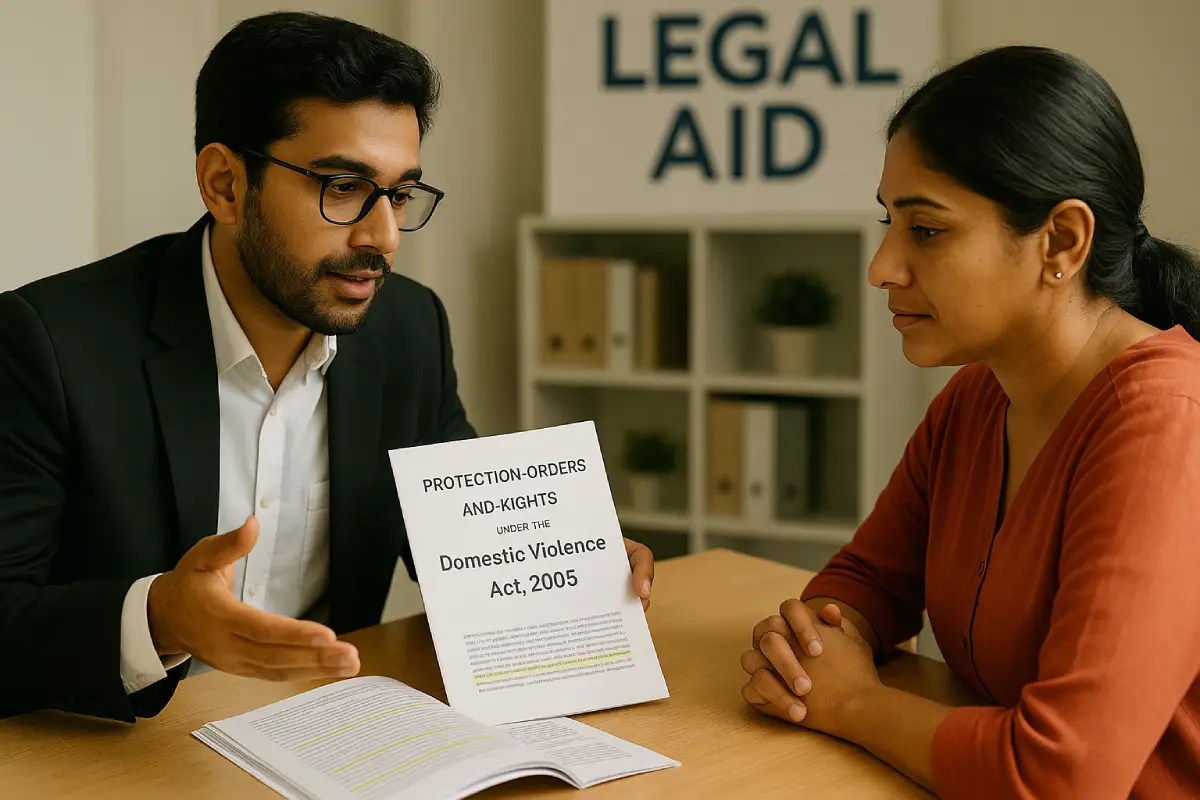
Even before or alongside a divorce case, survivors can use the Domestic Violence Act 2005 to secure immediate protection.
1. Application under Section 12 of the Domestic Violence Act
Through Section 12 of the Domestic Violence Act, the aggrieved woman, a Protection Officer, or any authorized person can file an application before the Magistrate seeking:
- Protection orders – restraining the abuser from committing or aiding violence
- Residence orders – right to live in the shared household or alternative accommodation
- Monetary relief – medical expenses, loss of earnings, maintenance
- Compensation orders – for physical or mental injury
- Temporary custody orders – to protect children from further harm
The Act expects Magistrates to list the case quickly and try to dispose of the application within 60 days, making it a relatively speedy remedy.
2. Parallel criminal complaint
Where the violence is severe, a survivor can:
- File an FIR under Section 85 BNS for cruelty by husband or relatives.
- Add other sections for assault, hurt, threats, or attempt to murder, where applicable
- Seek support from women’s cells and special police units
These criminal remedies are separate from the divorce case but strongly support Domestic Violence as a Ground for Divorce.
Key rights of the survivor during the divorce process
When a divorce case is based on domestic violence and cruelty, the survivor should be aware of core rights:
- Right to maintenance and monetary support
- Interim maintenance during the case
- Permanent alimony after the divorce, based on income and needs
- Right to safe housing
- Continued residence in the shared household under the Domestic Violence Act 2005
- Or an alternate accommodation ordered by the court
- Right to protection orders
- No contact orders
- Restraining the abuser from visiting the home or workplace
- Child custody and visitation
- The best interests and safety of the child are the top priority
- A history of domestic violence against the spouse or children is a serious factor
- Detailed guidance is available in ManAT Legal’s Hindu child custody laws in India.
- Right to a fair hearing without intimidation
- In-camera proceedings (closed-door hearings) where necessary
- Legal representation of choice
Role of police and Protection Officers
In domestic violence situations, police and Protection Officers have specific duties:
- Police must:
- Record complaints and register FIRs in cognizable cases
- Ensure immediate safety and medical help
- Inform survivors about their rights under the Domestic Violence Act 2005
- Protection Officers help by:
- Preparing the Domestic Incident Report
- Assisting in applying Section 12 of the Domestic Violence Act
- Helping with shelter, counselling, and access to legal aid
Their role becomes crucial when the survivor plans to use Domestic Violence as a Ground for Divorce, because their records and reports later support the divorce petition.
Challenges in domestic violence–based divorce cases
Despite strong laws, survivors often face real-world obstacles:
- Fear and dependency – emotional, financial, or social dependence on the abuser
- Delay in evidence collection – not visiting a doctor or police station immediately due to fear or pressure
- Social stigma and family pressure – relatives often push for compromise at any cost
- Counter-allegations and false claims – the abuser may file cross-cases or accuse the victim of cruelty in return
Courts are aware of both genuine cases and the risk of misuse. They look carefully at documents, timelines, and behaviour to reach a balanced decision. ManAT Legal also provides a separate guide on how to fight a false domestic violence case for those facing wrongfully filed complaints.
How a divorce lawyer can help in domestic violence cases
An experienced family lawyer is often the difference between feeling lost in the system and moving forward with clarity.
A lawyer can:
- Assess your situation
- Is it safer to start with a protection order under the Domestic Violence Act 2005?
- When should you file for divorce, and in which family court?
- Draft a strong divorce petition
- Clearly present Domestic Violence as a Ground for Divorce
- Attach key documents: FIRs, medical reports, photos, messages, Section 12 orders
- Coordinate multiple cases
- Domestic violence complaint before the Magistrate
- Divorce case in the family court
- Criminal investigation under Section 85 BNS
- Guide you through mediation and settlement
- Courts often refer divorce matters to mediation. To understand this better, see our article on mediation in divorce and the process.
- Plan long-term outcomes
- Child custody and visitation structures
- Alimony and property settlement
If you are in Bangalore, working with local divorce lawyers in Bangalore who understand the courts and procedures on the ground can make the process smoother.
FAQs on Domestic Violence and Divorce in India
1. How does domestic violence lead to divorce?
Domestic violence can amount to cruelty, which is a recognised ground for divorce under most personal laws. When physical, emotional, or economic abuse makes it unsafe or unreasonable for the victim to live with the spouse, the victim can file for divorce and rely on these incidents as evidence of cruelty. Parallel proceedings under the Domestic Violence Act 2005 can provide immediate protection and financial relief while the divorce case is pending.
2. What evidence is needed to prove domestic violence?
Courts prefer specific, consistent, and credible evidence. Useful material includes:
Medical records and injury photos
Police complaints and FIRs
Domestic Incident Reports (DIRs)
Messages, emails, and call records
Statements of neighbours, friends, or relatives
Financial records showing economic abuse
You do not need every type of document, but the stronger and more consistent your proof, the higher your chances of success.
3. What is Section 37 of the Domestic Violence Act?
Section 37 of the Domestic Violence Act 2005 gives the Central Government the power to make rules for effectively implementing the Act.KanoonGPT These rules cover practical aspects such as:
Qualifications and duties of Protection Officers
Forms for Domestic Incident Reports and applications
Procedures for service of notice and enforcement of orders
While Section 37 does not grant direct relief to victims, it ensures that the Act works smoothly in day-to-day practice.
4. Is domestic violence the same as intimate partner violence?
In many cases, yes. Intimate partner violence (IPV) usually refers to abuse by a current or former spouse or partner. The Domestic Violence Act 2005 covers a wider range of relationships in a shared household, but most complaints involve intimate partner violence. The law recognises physical, emotional, sexual, and economic abuse, so the terms often overlap in real-life situations.
Conclusion: You don’t have to stay in an abusive marriage
Living with domestic violence is exhausting. Many survivors feel trapped – scared of what will happen if they leave and equally scared of what will happen if they stay.
The law in India gives you clear options:
- Protection and monetary relief under the Domestic Violence Act 2005
- Criminal action under Section 85 BNS for cruelty by husband or in-laws
- Domestic Violence as a Ground for Divorce to legally end the marriage and rebuild your life
You do not have to collect every document or understand Section 12 of the Domestic Violence Act on your own. That is where we come in.
If you are dealing with abuse, worried about your children, or unsure how to start the legal process, ManAT Legal can help you:
- Stay safe while you plan your next steps
- File the right cases in the right courts
- Assert your rights to maintenance, shelter, and custody
👉 Reach out to ManAT Legal today for a confidential consultation. We will listen without judgment, explain your options in plain language, and help you move towards a life free from violence and fear.