
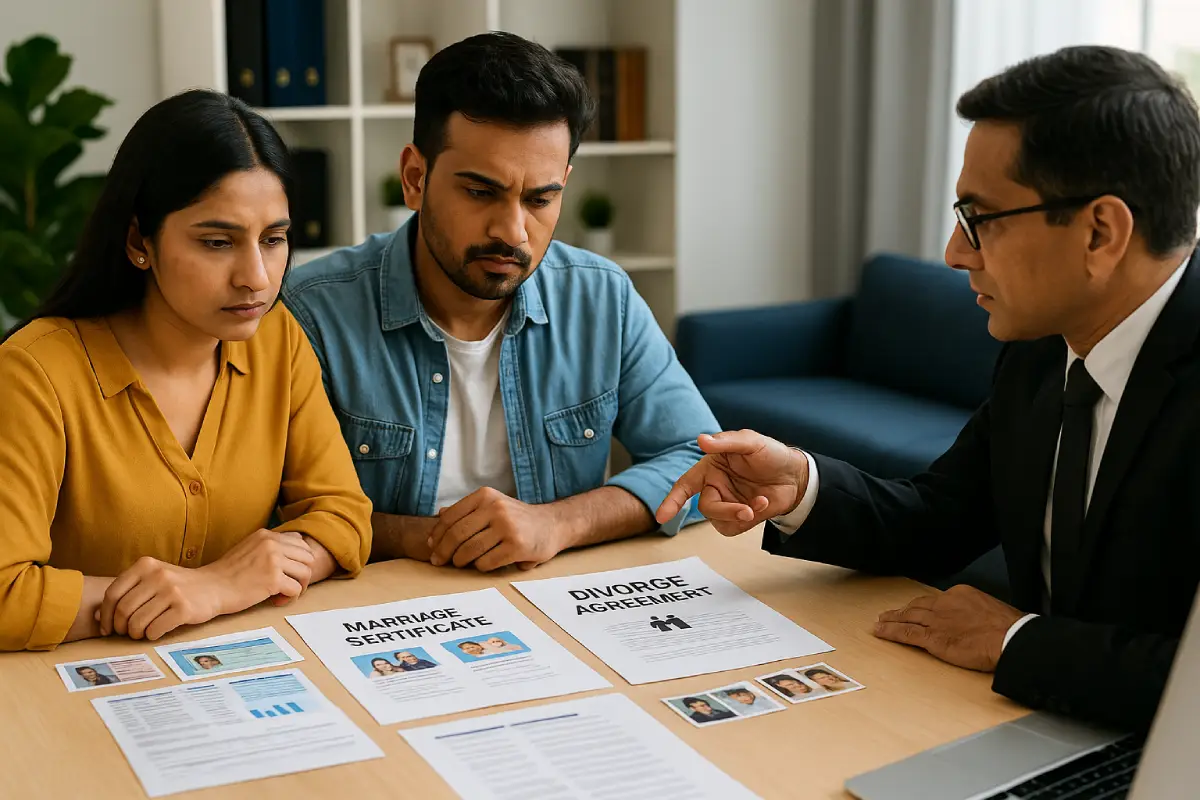
Documents Required for Divorce in India: a Complete Guide
If you are thinking about ending your marriage, one of the first questions that comes to mind is very simple: What are the documents required for divorce in India?
The short answer is this. You usually need:
- Proof that the marriage took place (marriage certificate or wedding photos/invitation card)
- ID and address proof of both spouses
- Passport-sized photographs
- Income and asset details
- Documents about children, if any
- Evidence that supports your grounds for divorce (for example, messages, medical records, police complaints)
The exact list depends on whether it is a mutual consent divorce or a contested divorce. In this guide, we will walk you through the Divorce Petition Format, the main documents required for divorce, and special documents required for mutual divorce, in clear and practical language.
1. Understanding divorce in India: mutual consent vs contested
Before you collect papers, you need to know which type of case fits you. The type of divorce changes both the process and the paperwork.

Mutual Consent Divorce (MCD)
In a mutual consent divorce, both husband and wife agree that the marriage has broken down and they want to end it.
- You both settle issues like alimony, child custody and property division in advance.
- The process is usually faster and less stressful.
- Under Section 13B of the Hindu Marriage Act, 1955, the law earlier spoke about a six‑month “cooling period” between the first and second motion. Today, courts can waive this period in genuine cases where the couple has already lived apart for a long time and there is no chance of reunion.
For mutual consent, the documents must show that you both agree on all key terms and that you have been staying apart as required. If you want a clearer comparison of both routes, you can also read our guide on mutual consent vs contested divorce.
Contested Divorce
In a contested divorce, one spouse files the case and the other does not agree, or there is a serious dispute.
- The petitioner must prove legal grounds such as cruelty, adultery, desertion, or other specific reasons mentioned in the marriage law.
- The case can take many months or even years.
- Evidence becomes very important.
In these matters, the documents required for divorce will focus on supporting your ground, such as medical records, emails, messages, and witness statements. To understand the underlying law in more detail, you may find our explainer on the grounds for divorce in India and our article on what a contested divorce is helpful.
Different religions in India follow different divorce laws, but the broad ideas about documents and the Divorce Petition Format remain similar. A family court in your area will usually hear the case.
2. Divorce Petition Format: what your petition must contain
The Divorce Petition Format is more than a simple application. It is a formal legal document that tells your story to the court in a structured way.

While each lawyer has their own drafting style, most petitions in India follow this general pattern:
- Title of the case
Example: “Petition for Dissolution of Marriage under Section 13 of the Hindu Marriage Act, 1955” or the relevant Act. - Court details
The heading usually starts with “IN THE FAMILY COURT AT _” followed by the city name. - Details of the parties
Full name, age, occupation and address of the husband and wife. The petition clearly labels who the Petitioner is and who the Respondent is. - Marriage details
Date and place of marriage, the type of ceremony, and details of children from the marriage. - Jurisdiction paragraph
A short section explaining why this particular family court has the power to hear the case. For example, the place where the marriage took place, where the couple last lived together, or where the wife currently resides. - Grounds and facts
This is the heart of the petition. It sets out the facts in numbered paragraphs. In a contested divorce, it explains incidents of cruelty, desertion or other grounds with dates and examples. In a mutual consent divorce, it explains that the parties have been living apart and have mutually agreed to dissolve the marriage. - Previous litigation
A statement about any earlier cases between the parties, such as domestic violence, maintenance, or restitution of conjugal rights. - No collusion and no other petition
A simple declaration that there is no secret agreement to mislead the court and that no other divorce petition between the same parties is pending elsewhere. - Prayer or relief clause
This part tells the court what you are asking for: dissolution of marriage, custody or access to children, permanent alimony, interim maintenance, and litigation costs. - Verification and signatures
At the end, the petitioner confirms that the facts are true to the best of their knowledge and signs the petition. The advocate also signs.
Your lawyer will use the above Divorce Petition Format and attach the documents required for divorce as annexures or schedules.
3. Key documents required for divorce in India
Now let us look in detail at the documents required for divorce. This list covers both mutual consent and contested cases.
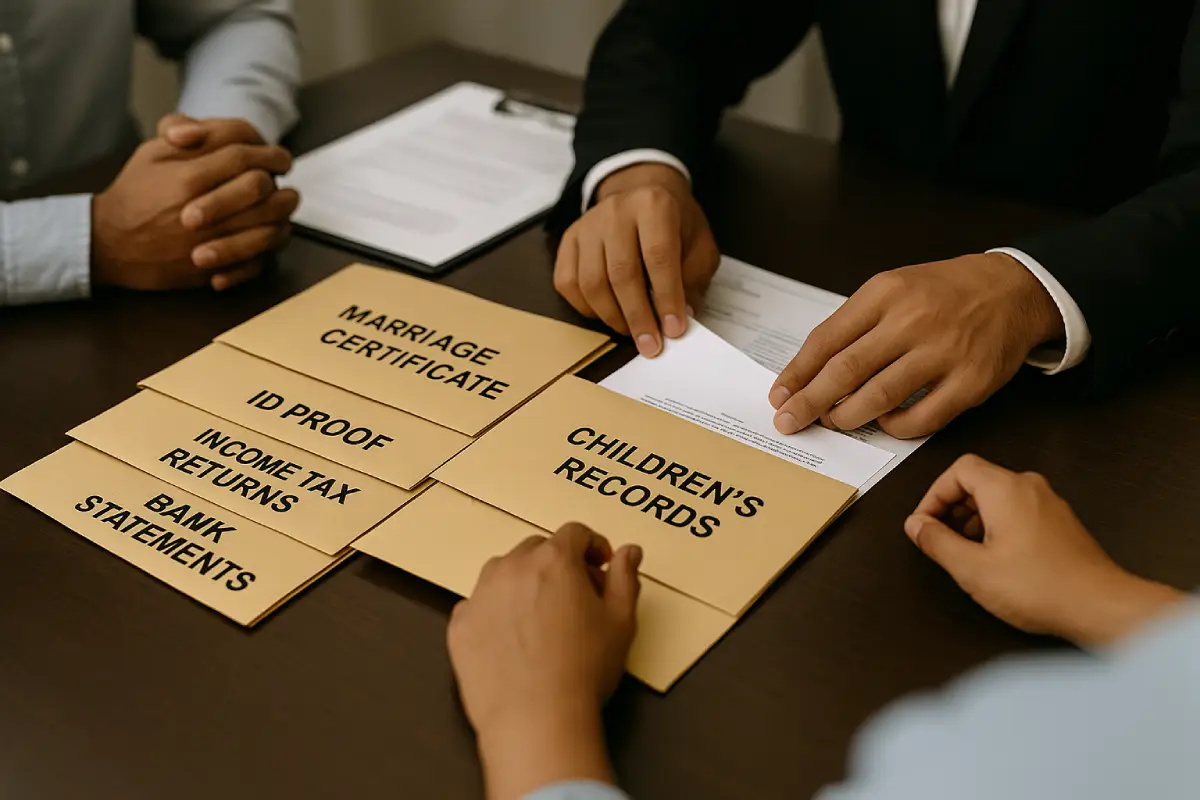
A. Proof of identity and marriage
These documents tell the court who you are and prove that a valid marriage took place.
- Marriage certificate, if available
- If you do not have a certificate, a wedding invitation card, and wedding photographs
- Aadhaar card, passport, PAN card or voter ID of both spouses
- Address proof of both spouses, such as Aadhaar, passport, driving licence or utility bills
- Passport-sized photographs of husband and wife, often from the wedding
Even if the marriage is not registered, the court can still treat it as valid if you can show other proof, so do not panic if you never did formal registration.
B. Financial documents
Money matters are central in most divorces. Courts need a clear picture of income and assets before deciding on maintenance or alimony.
Important financial documents required for divorce include:
- Salary slips for the last few months
- Income Tax Returns (ITR) for the last three years
- Bank statements
- Details of movable and immovable property
- Loan statements, home loan documents and EMIs
- Details of investments, insurance policies and business interests
If you expect to claim maintenance or defend against an inflated claim, you should gather these documents early.
C. Children-related documents
If you have children, the court will focus on their welfare above everything else.
You may need:
- Birth certificates of the children
- School ID cards and fee receipts
- Medical records, if any child has special needs
- Any joint parenting plans already agreed
These documents help the court decide custody, visitation and child support. If you are specifically worried about who will get custody and how access works, our guide to Hindu child custody laws in India goes into much more detail.
D. Evidence supporting your grounds (contested divorce)
In a contested case, your word alone is often not enough. You must support your claims with evidence.
Depending on your grounds, these documents required for divorce may include:
- Medical reports and prescriptions, if you allege physical violence or mental illness
- Police complaints, FIRs, or complaints before women’s commissions
- Screenshots of messages, emails, chat records or social media posts
- Photographs or videos supporting claims of cruelty or adultery
- Hotel bills, travel tickets or call records in appropriate cases
- Any written apology letters or admission messages from the spouse
Your lawyer will decide which documents are relevant and how to present them without violating privacy or other laws.
4. Extra documents required for mutual divorce
For couples who choose a peaceful route, the documents required for mutual divorce are slightly different.
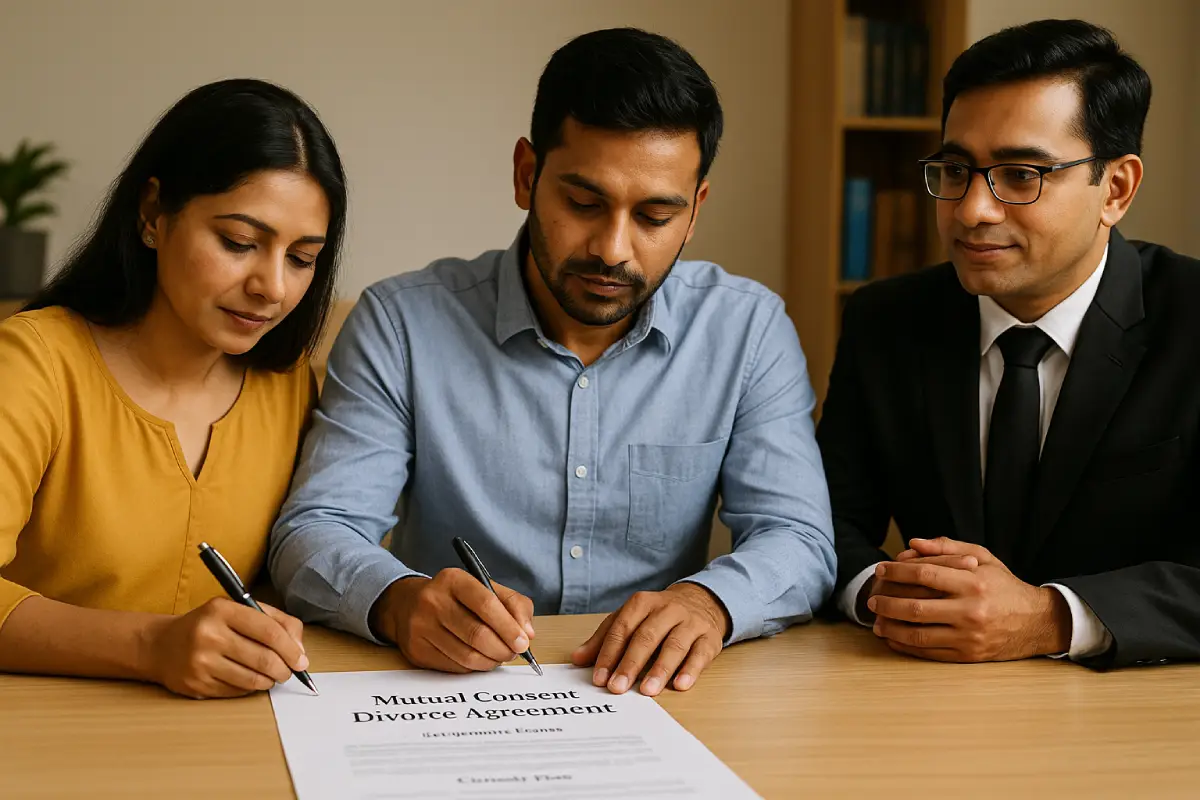
In addition to the core list above, mutual consent cases often need:
- Joint petition for mutual divorce signed by both spouses
- Joint photographs and proof that the couple has been living separately for at least one year
- Settlement agreement or Memorandum of Understanding (MoU) covering:
- One‑time settlement or monthly maintenance
- Who will keep which property, car or household items
- Custody, visitation and expenses for children
- How joint loans and liabilities will be handled
- Affidavits from both spouses confirming their free consent and that there is no pressure or fraud
Courts also look at the time you have been apart. If you have already lived separately for a long period and all issues are settled, the judge may waive the cooling period and grant a quicker divorce. But this still takes more than a few days in most courts, because the file has to move through proper stages.
5. How to use these documents in the actual filing process
Knowing the documents required for divorce is only one part. You also need to understand when and how to use them.
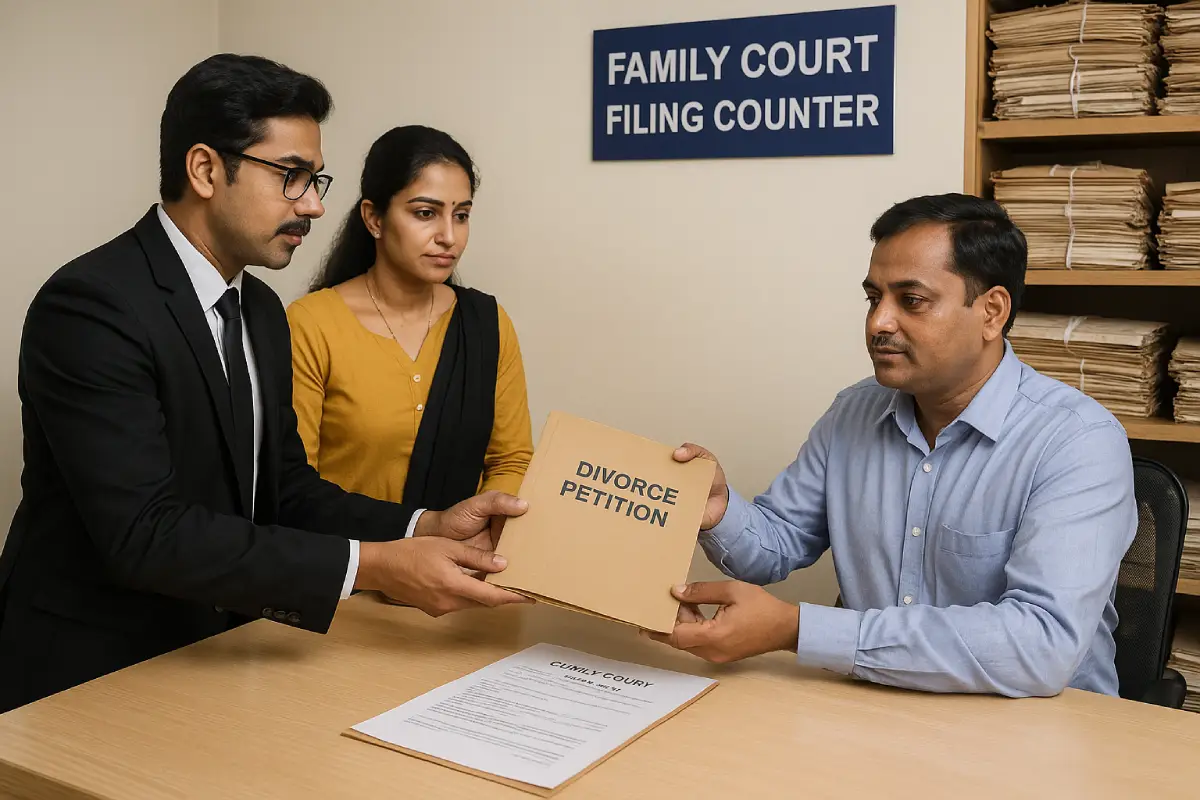
Here is a simple flow:
- Consult a divorce lawyer
Share your facts honestly. Carry basic documents like marriage proof, ID proof and any key evidence so the divorce lawyer can guide you. - Choose the right type of case
If both spouses agree, a mutual consent divorce often saves time and money. If there is serious cruelty or no chance of agreement, contested divorce may be the only option. - Draft the petition using the correct Divorce Petition Format
Your lawyer prepares the petition, refers to the law, and attaches copies of the documents as annexures. - File the petition in the right family court
This is usually where the marriage took place, where you last lived together, or where the wife currently resides. - Attend court dates and mediation
In many cases, the judge will first encourage settlement through mediation. You can learn more about this process in our article on what is mediation in divorce and how it works.
In mutual consent cases, both parties appear for the first and second motions. In contested cases, the respondent files a reply, evidence is recorded, and cross‑examination happens. - Get the final decree of divorce
Once the judge is satisfied that the marriage has broken down and all legal requirements are met, the court passes a decree of divorce. You should keep certified copies safely with your other important documents. You can also track case status and access orders online through the official eCourts services portal.
6. Property, alimony and the 50% myth
Many people search for more than just the documents required for divorce. They want to know what happens to the property and money afterwards.

In India, there is no automatic rule that the wife gets 50% of the husband’s property after divorce. Courts look at:
- Who owns the property (in whose name it stands)
- Who paid for it and how
- The financial needs and earning capacity of both spouses
- The standard of living during marriage
- The welfare of any children
The wife can claim maintenance or alimony, a fair share in joint property, and protection of her streedhan (her own jewellery and gifts). The exact amount is decided on a case-by-case basis. Recent judgments show that courts are willing to grant higher, realistic alimony where the earning spouse has a strong income.
Because of this, accurate financial documents are just as important as the basic identity documents required for divorce.
FAQs on documents and divorce in India
1. What are the documents required for divorce in India?
The main documents required for divorce in India are:
Marriage certificate or wedding invitation and photos
ID and address proof of both spouses
Passport-sized photographs
Income documents like salary slips, ITRs and bank statements
Property and asset details
Children’s birth certificates and school records, if any
Evidence supporting your ground for divorce such as messages, medical reports, police complaints and photos
Your lawyer may ask for extra documents based on your personal law and facts.
2. How to draft a petition for divorce?
To draft a petition, you should follow a clear Divorce Petition Format:
Start with the name of the family court and the title of the petition.
Add full details of both spouses and the marriage.
Explain why that court has jurisdiction.
Set out the facts and grounds in simple numbered paragraphs.
Include a prayer asking for divorce, maintenance, custody and other relief.
End with a verification clause and sign it.
Because small drafting errors can cause delay, it is wise to take help from an experienced family lawyer.
3. How to get divorce in 7 days?
Many people search online for “divorce in 7 days”, but in real life this is not how the system works.
Even in a mutual consent divorce, there are at least two motions in court.
Files must be checked, listed, and heard by the judge.
Some courts may waive the cooling period and finish the case faster when the couple has been living apart for a long time and all terms are settled.
So, you may get a relatively quick divorce in certain situations, but a genuine, legal divorce in just seven days is extremely rare. Be careful of anyone who promises it without explaining the process.
4. Does the wife get 50% of the husband’s property after divorce?
No. Indian law does not say that a wife automatically gets 50% of her husband’s property after divorce.
Instead, courts look at many factors:
The income and needs of both parties
The standard of living during the marriage
Who owns and who paid for the property
The cost of raising children, if any
The wife may receive maintenance, a share in joint assets, and full rights over her own streedhan. Because there is no fixed formula, proper legal advice and complete financial documents are very important
Need help collecting documents required for divorce? ManAT Legal can assist
When a marriage breaks down, it is normal to feel overwhelmed. You may have documents in different places, worried parents on both sides, and no clear idea of which papers really matter.
If you file without the right documents required for divorce, the court may keep asking for more information, and your case can drag on. On the other hand, a well‑prepared file with a clear Divorce Petition Format, complete financial details, and the correct documents required for mutual divorce or contested divorce can move smoothly.
At ManAT Legal, our family law team, including experienced divorce lawyers in Bangalore, helps you:
- Understand which documents you truly need in your situation
- Organize marriage, identity, and financial records into a clear brief
- Choose between mutual consent and contested divorce based on your goals
- Draft and file a strong, accurate divorce petition in the right family court
If you are unsure where to start or worried about missing something important, you do not have to handle it alone. Reach out to Divorce Lawyers in Bangalore at ManAT Legal for a confidential consultation and take the first confident step towards closing this chapter with clarity and dignity.