

Partition Disputes in Karnataka: Shares, Suit Stages and Final Decree
Reviewed by Manu Shankar, Advocate, ManAT Legal
Partition disputes in Karnataka arise when people who claim interests in the same property cannot agree on their shares, physical division, use, sale or possession. A court does not begin by simply splitting the property. It first identifies the property and parties, determines the legal source and extent of each proven interest, and then works out how the declared shares can be given effect.
In partition disputes in Karnataka, the process does not ordinarily end with a preliminary decree declaring shares. The matter continues until a final decree gives effect to division, or another lawful method resolves property that cannot conveniently be divided.
What decides shares in partition disputes in Karnataka?
The first question is: how did each person obtain or claim an interest in this property? The answer may turn on:
- a purchase deed showing joint ownership;
- ancestral or coparcenary claims;
- succession to an owner who died intestate;
- a will;
- a gift, release, settlement or prior partition deed;
- a family arrangement;
- a court decree; or
- a competing transfer or encumbrance.
The applicable personal or succession law, the dates of death and transactions, the character of the property and the complete family/title chain can all change the result. It is therefore unsafe to calculate shares from a short family description or assume that every relative has an equal entitlement.

Who needs to be part of the case?
A partition claim should account for every person whose asserted interest may be affected. Depending on the facts, that can include co-owners, heirs, persons claiming through a deceased owner, purchasers, recipients under disputed instruments, mortgagees or occupants whose rights are directly in issue.
Leaving out a necessary party or property can delay the suit, create inconsistent decrees or prevent effective division. Conversely, naming people with no relevant interest adds cost and complexity. The family tree, title chain and encumbrance record should therefore be reconciled before pleadings are finalised.
Records commonly reviewed
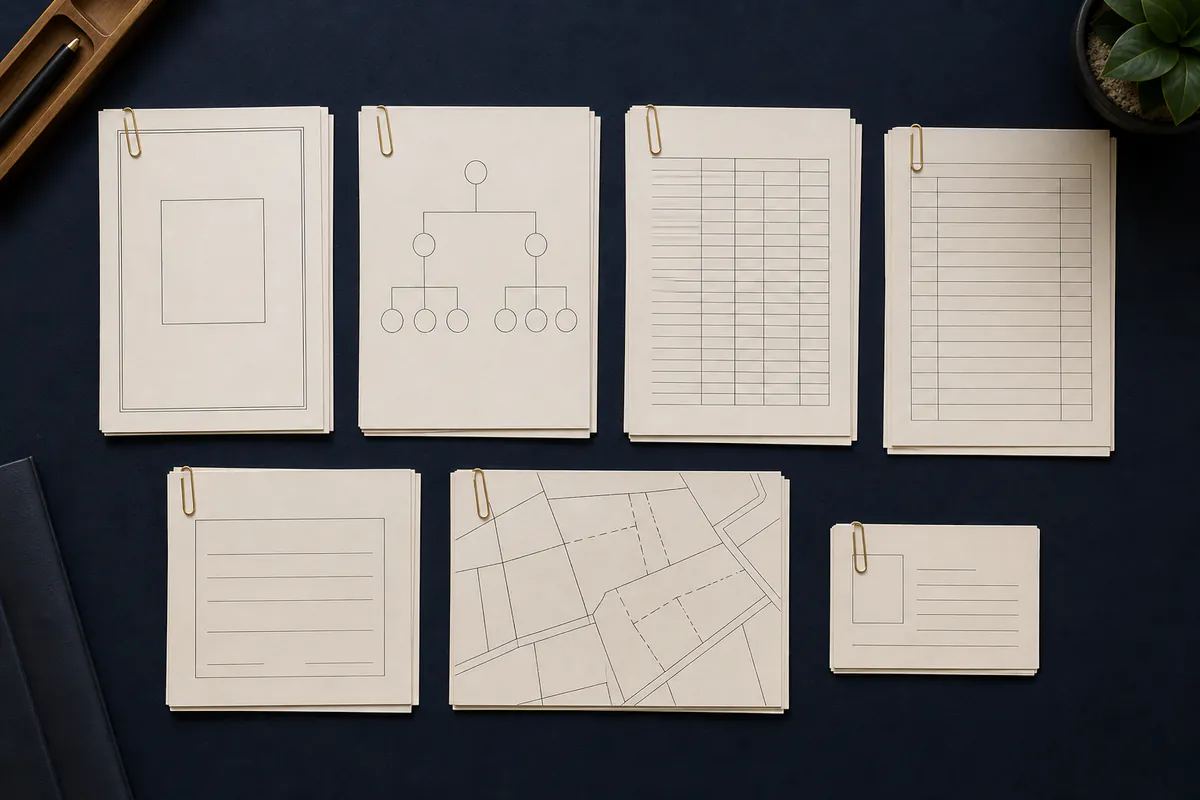
No single document proves every partition claim. A useful initial file may include:
- sale, gift, release, settlement and earlier partition deeds;
- wills and probate or succession records where applicable;
- death certificates and a supported family tree;
- mutation, khata and municipal or revenue records;
- encumbrance certificates;
- survey sketches, property descriptions and measurements;
- tax receipts and records of possession or income;
- loan and mortgage documents;
- earlier notices, admissions, settlements, suits or decrees; and
- records of construction, rent, sale negotiations or alleged exclusion.
Revenue and municipal entries may be relevant evidence, but their legal effect must be assessed alongside title instruments and the applicable law. A property-verification exercise for a buyer serves a different purpose from proving disputed shares in court.
Is a legal notice required before a partition suit?
A pre-suit notice is not a universal prerequisite for every private partition claim. It can nevertheless clarify the properties and shares asserted, request records, invite a negotiated division and record objections to sale or construction. A mandatory notice may arise in special circumstances, including because of the identity of a proposed defendant or another applicable provision.
The strategic value of a notice depends on urgency. If there is a real risk of transfer, demolition, construction, waste or dispossession, counsel should consider whether court protection is needed rather than assume that correspondence alone preserves the property.
Settlement can be more flexible than court division
Co-owners may agree on physical portions, sale and distribution, one party buying out another, adjustment across multiple properties, or another lawful arrangement. The form and registration consequences of the settlement need review. An informal conversation or unsigned family understanding may not create the certainty needed for title and future transactions.
A settlement should identify all properties, shares, possession, liabilities, documents to be executed, timelines and consequences of default. Tax and stamp-duty advice may also be required; those consequences are outside the scope of this article.
What happens in a partition suit?
Although procedure varies with the pleadings and court, the core stages commonly include:
- Jurisdiction and valuation: identify the correct court based on the property, relief and applicable valuation rules.
- Pleadings: describe the title source, relationship or co-ownership, schedule property, shares claimed, disputed transactions and relief sought.
- Responses and issues: defendants may dispute the character of the property, shares, inclusion of assets, validity of documents, limitation or possession.
- Evidence: parties prove title, succession, transactions, possession and other contested facts through admissible material.
- Preliminary decree: the court declares the rights and shares established in the suit.
- Final-decree process: the declared shares are worked out through actual division or another legally permissible solution.
- Possession/execution: further orders or execution may be needed to put the parties in possession and complete consequential steps.
Interim injunctions during the dispute
A party may seek temporary relief to prevent conduct that could frustrate the suit, such as a threatened alienation, material change, demolition, construction or dispossession. Relief is not automatic merely because a partition suit has been filed.
The applicant must address the established injunction requirements: a prima facie case, balance of convenience and irreparable injury, supported by credible material. The exact order sought should be proportionate and should not obtain, at an interim stage, everything that could be granted only after trial.
Detailed temporary-injunction procedure is outside the scope of this partition guide.
Preliminary decree and final decree are different
Under Order XX Rule 18 of the Code of Civil Procedure, 1908, the manner of decree depends partly on the nature of the property and revenue assessment. In practical terms:
- a preliminary decree declares the parties’ rights or shares; and
- a final decree gives effect to those declarations through division by metes and bounds or another lawful working-out of the property.
The Supreme Court has explained that a preliminary decree does not bring a partition suit to an end. The suit continues until the rights are finally worked out. See the Court’s 11 August 2020 judgment and 20 December 2024 judgment.

Karnataka’s direction on the final-decree stage
The Karnataka High Court’s Circular RJ 03/2024 directs trial courts, after passing a preliminary decree in a partition suit, to continue the matter for taking steps toward the final decree. Ordinarily, the parties should not be required to file a separate final-decree application as though the concluded share declaration ended the suit.
That procedural direction does not make final division automatic. Survey, commissioner proceedings, objections, valuation, the nature of the property and later events may still need attention. If physical division is impracticable, the legally available alternatives depend on the pleadings and applicable law.
Possession and execution
A declaration of share is not always the same as receiving an identified portion in possession. The final decree should define how the share is worked out. Registration, engrossment, delivery of possession, removal of obstruction or execution proceedings may then arise depending on the decree and conduct of the parties.
The procedural record should be followed through to completion. Stopping after a preliminary decree can leave the practical dispute unresolved.
Common mistakes
- Calculating shares without reviewing the source and character of the property.
- Omitting a co-owner, heir, transfer or property from the case analysis.
- Treating mutation, khata or tax payment as conclusive title by itself.
- Filing an inaccurate schedule or using inconsistent property measurements.
- Ignoring an alleged will, release, gift, prior partition or sale until late in the case.
- Assuming a pending suit automatically restrains all dealings without an order.
- Treating the preliminary decree as the end of the process.
- Entering an informal settlement without checking execution and registration requirements.
Frequently asked questions
Can one co-owner sell an undivided share?
The legal consequences depend on the nature of the property, the transferor’s proven interest, restrictions under applicable law and the purchaser’s position. A transfer does not automatically establish that a particular physical portion exclusively belonged to the seller. The deed, title chain and pending proceedings require review.
Can a court divide every property physically?
Not always. Measurements, access, planning constraints, the nature of a building and the value of proposed portions may make a convenient physical division difficult. The court’s available course depends on the governing law, evidence and relief sought.
Does long possession by one family member end the others’ rights?
Not automatically. The nature of possession, knowledge, exclusion and any pleaded limitation or ouster case must be proved under the applicable law. Mere occupation should not be converted into a universal conclusion.
Can shares change after a preliminary decree?
Later events can sometimes affect how rights are worked out before a final decree. Whether an adjustment is legally permissible depends on the event, the existing decree and procedural law. Prompt advice is needed if a party dies, a transaction surfaces or another material event occurs.
Related ManAT resources
This guide to partition disputes in Karnataka is general information, not legal advice. Shares, forum and procedure depend on the title documents, parties, property, dates and law applicable to the specific dispute.