

Arrested in Bangalore: First 24 Hours – A Practical Legal Guide
If you are arrested in Bangalore, treat the first 24 hours like an emergency checklist. Your goal is simple: protect your rights, avoid self-incrimination, and move fast toward bail. An arrest is not merely a police action; it immediately engages constitutional safeguards, statutory protections, and strict procedural timelines. The first 24 hours are legally critical. What is said, signed, or omitted during this period can materially affect bail, remand, and even the defence at trial.
The immediate objective is threefold
- Preserve constitutional protections.
- Avoid self-incrimination.
- Initiate the bail process at the earliest legally permissible stage.
This guide explains what an accused person and the family must do immediately after an arrest in Bangalore. For the underlying constitutional and statutory safeguards, read the separate rights when arrested in India guide.
Immediate Actions Upon Arrest (Priority Checklist)
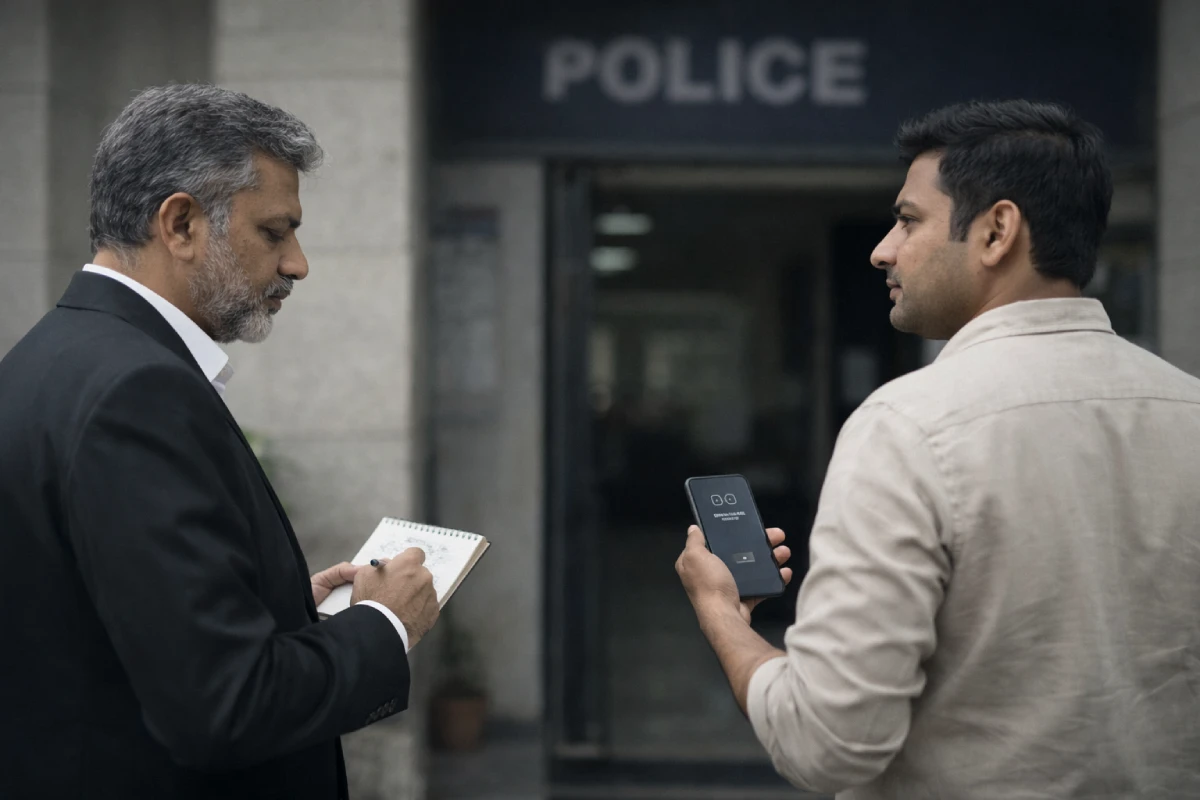
An arrested person should calmly and clearly assert the following:
- Ask the police officer to state the grounds of arrest and request written communication.
- Inform the police:
“I wish to consult my lawyer. I will make no statement without legal advice.” - Require the police to notify a family member or nominated person and record the same.
- Do not sign any statement, confession, or blank paper unless explained by your advocate.
- Request a medical examination if injured or unwell.
- Ensure production before a magistrate within 24 hours of arrest (excluding travel time).
- Begin bail preparation immediately; delay often results in avoidable custody.
Step 1: Conduct During the First Hour

Limit Communication
Provide only identification details:
- Name
- Address
- Basic personal particulars
Do not discuss facts of the case, justify conduct, or narrate events.
Clarify Basic Information
You may ask:
- Name of the police station
- FIR number
- Applicable sections/offences
- Name of the Investigating Officer (IO)
Right to Legal Assistance
The procedural law recognizes the right of the accused to consult an advocate during interrogation (though not continuously throughout questioning).
If access to counsel is denied, this must be brought to the magistrate’s notice at the remand hearing.
Step 2: What the Family Should Do Immediately

Families often unintentionally delay bail by acting emotionally instead of procedurally. The correct sequence is:
1. Verify Information
Obtain:
- Police station name
- Time of detention
- FIR number
- Sections invoked
- Investigating Officer’s details
2. Contact a Bail Lawyer Immediately
Night arrests and weekend arrests are common. Delay frequently leads to police custody remand.
3. Prepare Bail Documentation
Keep ready:
For the accused
- Identity proof
- Address proof
- Employment or medical records (if relevant)
For sureties (1–2 persons)
- Aadhaar / Voter ID / Passport
- Address proof
- Property or solvency proof (if required)
4. Avoid Interference
Family members should not contact the complainant or witnesses or attempt compromise at the police station. Such conduct can prejudice bail.
Legal aid assistance is also available through the Karnataka State Legal Services Authority (KSLSA).
Step 3: Mandatory Police Duties After Arrest

The arrest procedure is not discretionary it is regulated by constitutional safeguards and statutory requirements.
1. Communication of Grounds
The arrested person must be informed of the reason for the arrest.
2. Intimation to Relative or Friend
Police must inform a nominated person and record the communication.
3. Arrest Memo and Documentation
Police are required to prepare:
- Arrest memo
- Seizure mahazar (if property is seized)
- Case diary entries
The accused or witness should verify the date and time accuracy.
4. Medical Examination
A medical check protects both the accused and the police against later allegations.
5. Production Before Magistrate
No person can be detained in police custody beyond 24 hours without judicial authorization.
Step 4: The Remand Hearing (First Court Appearance)

After arrest, the police must produce the accused before a Magistrate and may seek custody for investigation.
Types of Custody
| Custody Type | Meaning | Legal Effect |
|---|---|---|
| Police Custody | The accused remains with the police | Interrogation permitted |
| Judicial Custody | The accused was sent to jail | Police interrogation restricted |
Police Custody Limits
Police custody cannot exceed 15 days in total in a case.
The law permits police custody only within an early investigation window:
- Approx. 40 days (for 60-day investigation offences)
- Approx. 60 days (for 90-day investigation offences)
A delayed custody request should be opposed by defence counsel.
What the Accused Should Tell the Magistrate
Keep statements brief and factual:
- Request legal consultation.
- Inform if the family was not notified.
- Mention medical issues, if any.
- State if signatures were taken under pressure.
Step 5: Bail Options in the First 24 Hours

A bail strategy depends on the nature of the offense.
1. Bailable Offences
The accused is entitled to bail upon furnishing sureties.
2. Non-Bailable Offences
The court considers:
- Gravity of offence
- Criminal antecedents
- Risk of tampering with evidence
- Cooperation with the investigation
The immediate legal aim is to respond to the remand request and pursue the bail route that fits the offences and custody stage. See the focused Magistrate versus Sessions Court regular-bail guide, and prepare the Bangalore bail documents and surety checklist before the hearing.
3. Anticipatory Bail
If an arrest is apprehended after FIR registration, an application may be filed before the Sessions Court or High Court.
4. Default Bail
If investigation is not completed within the statutory time limits (60/90 days), the accused may obtain statutory bail.
Common Mistakes That Delay Bail
Avoid the following:
- Giving detailed explanations to the police
- Signing voluntary statements
- Negotiating with the complainant
- Withholding facts from your lawyer
- Ignoring remand dates or custody timelines
Key Legal Terms
| Term | Meaning |
|---|---|
| Arrest Memo | Record of arrest details |
| Remand Application | Police request for custody |
| Surety | Person guaranteeing court attendance |
| Bail Bond | Written undertaking to comply with conditions |
| Case Diary | Investigation record used by the court at remand |
Frequently Asked Questions
u003cstrongu003eCan bail be obtained the same day?u003c/strongu003e
Yes, in bailable offenses if documentation is ready. Non-bailable offences depend on court’s discretion.
u003cstrongu003eFIR registered, what next?u003c/strongu003e
Obtain FIR details, consult a lawyer, and assess anticipatory bail.
u003cstrongu003eWhat are the rights after an arrest?u003c/strongu003e
Right to know grounds, consult a lawyer, inform family, medical examination, and production before a magistrate within 24 hours.
u003cstrongu003ePolice custody vs. judicial custody, which is preferable?u003c/strongu003e
From a defense perspective, judicial custody is generally safer because interrogation powers are restricted.
u003cstrongu003eCan a lawyer meet during interrogation?u003c/strongu003e
Yes. If denied, the issue should be raised before the magistrate.
Conclusion
An arrest does not imply guilt. However, procedural missteps within the first 24 hours can significantly prejudice bail and defense strategy. A prompt legal response, proper documentation, and careful exercise of rights often determine whether the accused remains in custody or secures early release.
Professional legal guidance at the earliest stage ensures:
- procedural compliance,
- protection against self-incrimination,
- and the fastest lawful route to bail.